
Echoes of the Past: How Version 2.2's Gentle Features Shaped My Star Rail Odyssey
Honkai: Star Rail's 2.2 QoL update muted minimized windows and showed friend activities, quietly transforming routines.
I still remember the spring of 2024, when the Astral Express hummed with the rumor of a new update. Two years have drifted by like stardust, yet certain moments remain embedded in my memory—like the quiet transformations that version 2.2 brought to my Trailblazing life. The Penacony arc was unfolding in all its dreamlike splendor, but it was the subtle, almost invisible threads of quality-of-life that truly wove themselves into my daily rhythm. To this day, as I stand amidst the chaotic beauty of the 2026 cosmos, I often reflect on how those small changes altered the very fabric of my journey. They were not the thunderous arrival of a new planet or the cataclysm of a Stellaron burst; they were the gentle hand that adjusted the lens of a telescope, bringing a once-blurred nebula into crystalline focus.
The first of these gifts was the ability to mute the game when I alt-tabbed away. Before that, my small apartment would hum with the loops of idle battle cries and menu music, a constant murmur that clung to the air like morning fog. But after the update, when I minimized the screen, the sound dissolved instantly. It was like plunging into the silent, crushing depths of an oceanic trench where no light or noise dares to tread—a profound sensory retreat that preserved my sanity. As an auto-battler who often juggles Calyx farming with work or reading, this feature became my anchor. It allowed the game to run its course while my mind wandered elsewhere, a parallel universe I could leave to its own devices without a whisper of disturbance. That quiet engine, purring beneath the surface of my desktop, has accompanied me through countless late-night grinding sessions ever since. It was a small brushstroke painted on the canvas of the interface, yet it turned the chaotic symphony of a space fantasy into a solo piece I could appreciate at will.
In the same breath, version 2.2 delivered a social feature that felt like a window into a living, breathing galaxy. My friends list transformed from a static directory into a dynamic star chart. Now, I could see what game mode a companion was braving: whether they were lost in the Simulated Universe’s procedural corridors or challenging the memories of the Forgotten Hall. Each status was like a tiny beacon, a bioluminescent flicker in the dark sea of space, signaling someone is here, blazing their own trail. Yet, true to the game’s spirit, there was (and still is) the option to veil my own signal—to become a ghost drifting through the cosmos, unseen. This duality mesmerized me. It was not just a tool; it was a philosophical nod to the solitary wanderer and the communal voyager alike. In 2026, this feature has blossomed into a fuller social tapestry, but its seed was planted back then, reminding me that connection is most beautiful when it comes with the choice of solitude.
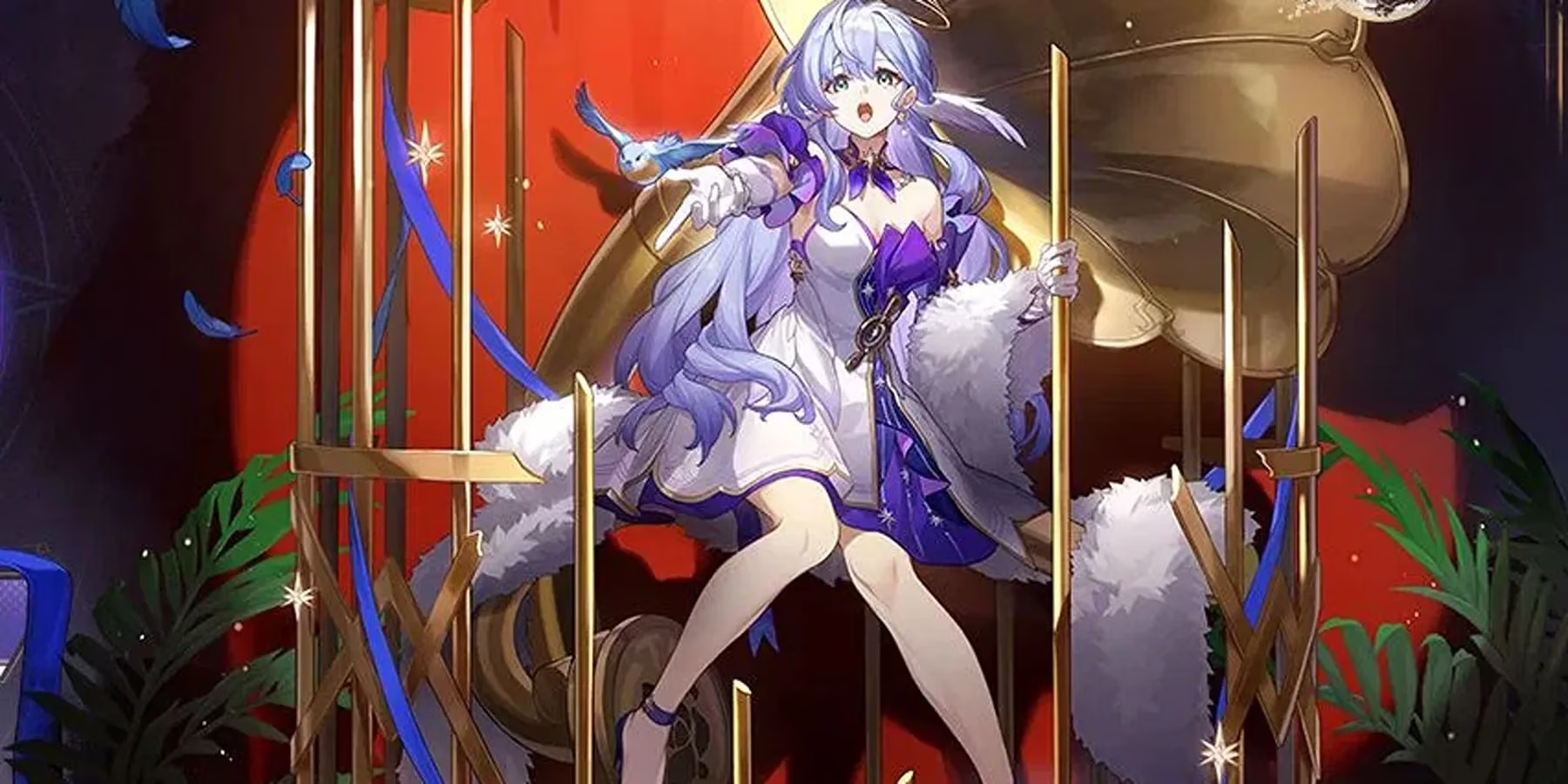
And then, the characters. Oh, the characters. Version 2.2 unveiled two souls who would etch themselves into the hearts of Trailblazers. Robin arrived first in my mindscape, a five-star Physical Harmony unit, as though the very concept of melody had crystallized into a warrior. Her design was a poem of white flurry and purple accents—like a midnight orchid blooming defiantly in a snowstorm. Whenever she stepped onto the battlefield, her voice was not a weapon but a balm, boosting allies with harmonies that felt like moonlight distilled into sound. I recall the way her ultimate animation unfurled, and how the party’s health bars surged upward as if nourished by an invisible spring. She was, and remains, a testament to the idea that true strength often sings rather than shouts.
Beside her came Boothill, a Hunt-path wanderer dishing out Physical damage with the deadpan precision of a cosmic gunslinger. Early leaks painted him as a duelist whose Skill triggered a high-noon confrontation, while his Ultimate drilled a Physical Weakness into a single foe with the force of a desert thunderbolt splitting a lonely cactus. His kit felt like a revolver loaded with starlight—each shot a deliberate, weighted act. I remember the community’s feverish speculation: would his duel mode alter the turn order? How would his Weakness implant reshape team compositions? Wielding him was like riding a tamed sandstorm, wild yet eerily responsive. Even now, in the 2026 memory halls, his silhouette against a Penacony sunset is an afterimage I cannot shake.
Looking back, version 2.2 was not a revolution. It was a refinement, a gentle recalibration of the instruments that guide a Trailblazer’s hand. The mute feature muzzled the white noise of repetition; the status display threaded a subtle social yarn; Robin and Boothill gifted us two distinct flavors of Physical power. Together, they formed a quiet ensemble—a constellation of minor miracles that have since become foundational. As I prepare to board the Express for the next uncharted chapter, I carry these memories as a cherished polar star. In the grand, ever-expanding universe of Honkai: Star Rail, it is often the softest echoes that resonate longest.